
How to Eliminate Compliance Gaps with the Right Incident Management Software
Post on
February 19, 2026 •
By
TrackTik
When physical security incidents occur at manufacturing plants, healthcare facilities, or technology campuses, the consequences extend far beyond the immediate event. In 2024 alone, OSHA collected over $9.9 million in workplace safety fines, while healthcare organizations paid an average of $579,003 per HIPAA Security Rule violation. These penalties represent just the tip of the iceberg, as the real costs include operational downtime, lost certifications, damaged reputation, and regulatory scrutiny.
For corporate end users across regulated industries, compliance gaps in physical security incident management have become a critical business risk that demands immediate attention.
What Are Compliance Gaps and Why Do They Matter?
Compliance gaps are the dangerous spaces between what your security policies require and what actually happens on the ground. These gaps typically manifest through incomplete incident documentation, inconsistent reporting procedures, missing evidence chains, and inadequate follow-through on corrective actions.
The financial stakes continue to escalate. OSHA penalties for serious violations now reach $16,550 per violation, with willful or repeated violations carrying fines up to $165,514. Healthcare organizations face HIPAA violations up to $1.5 million per incident, with OCR imposing over $8 million in fines across 19 settlements in just the first half of 2025—a record high. Manufacturing facilities experiencing safety incidents can face fines exceeding $1 million and placement in OSHA’s Severe Violator Enforcement Program.
Manual systems—Excel spreadsheets, email chains, paper forms—create systematic vulnerabilities that audits consistently expose. OCR investigations have revealed that missing risk analyses and failure to implement security management plans were “significant deficiencies that contributed to security incidents and breaches.”
Essential Requirements for Compliance-Ready Software
Enterprise organizations must evaluate incident management platforms against specific regulatory obligations. Manufacturing facilities need OSHA recordkeeping and EHS compliance support. Healthcare organizations require HIPAA Security Rule physical safeguards and breach notification capabilities. Technology companies must satisfy insurance requirements and industry frameworks like SOC 2 or ISO 27001.
Effective platforms deliver several non-negotiable capabilities:
- Multi-Source Incident Intake: Seamless reporting via mobile app, web portal, emergency hotline, or system integration ensures nothing falls through the cracks—critical when managing contract security providers across multiple locations.
- Configurable Workflows: Automated routing based on incident type ensures the right people are notified, required information is collected, and compliance-mandated timeframes are met. A workplace injury requires different handling than an access control breach or hazardous material spill.
- Evidence Management with Chain of Custody: Time-stamped audit trails, encrypted storage, and granular access controls preserve video footage, photos, and witness statements for regulatory inspections and litigation.
- Audit-Ready Reporting: Instantly generate comprehensive reports filtered by incident type, location, or regulatory framework. When OSHA conducts an inspection or OCR requests documentation, accessible records make the difference between a clean audit and enforcement action.
How Automated Workflows Close Compliance Gaps
Workflow automation means predefined triggers automatically route tasks, escalate issues, and track corrective actions based on incident characteristics, eliminating compliance gaps that emerge from human error and forgotten follow-ups.
When a healthcare facility reports a patient elopement, automated workflows simultaneously notify security, clinical leadership, and risk management; initiate response protocols; capture timestamped video evidence; and create action timelines—all within minutes. When a manufacturing facility reports a near-miss, the system automatically assigns root cause investigation, schedules follow-up inspections, and tracks corrective action completion against OSHA timelines.
Organizations using automated workflows report significant reductions in missed follow-ups, faster incident closure times, and dramatically improved audit performance. When regulators find well-documented, systematically managed records with clear evidence of timely corrective actions, they’re far less likely to pursue penalties.
The Power of Unified System Integration
The most significant compliance gaps emerge when incident data remains disconnected from access control platforms, video management systems, HR databases, and SIEM tools. Strategic integration creates the unified oversight that auditors expect, and regulators demand.
For technology campuses experiencing tailgating incidents, integration between incident management and access control systems automatically correlates badge data with reports, identifying patterns and flagging locations requiring intervention without manual effort.
Healthcare organizations benefit from video management integration that automatically tags, preserves, and associates relevant footage with incident records—creating defensible evidence chains that satisfy HIPAA documentation requirements.
Manufacturing facilities leverage integrations with Computerized Maintenance Management Systems (CMMS), enabling seamless coordination between security incidents and safety events while satisfying OSHA’s hazard abatement requirements.
Protecting Evidence While Maintaining Privacy
Evidence management must balance competing requirements: preserving defensible records while protecting sensitive information. Healthcare video footage may incidentally capture protected health information. Incident reports may reference patient identities. HIPAA’s Security Rule requires both preservation and protection.
Leading platforms provide encrypted storage and transmission, role-based access restrictions, automated redaction for personally identifiable information, and comprehensive audit trails documenting every access to sensitive records. Automatic video transcription and AI-assisted evidence analysis reduce manual effort while ensuring comprehensive, documented review—reducing the risk of overlooked critical information.
Building Continuous Improvement
Technology alone cannot eliminate compliance gaps. Organizations must invest in training that ensures every stakeholder understands their compliance role. Scenario-based exercises simulate incident response under various conditions. Quarterly tabletop exercises identify procedural gaps before auditors do.
Analytics transform incident data into actionable insights. When dashboards reveal that near-miss incidents cluster around specific equipment or shifts, leadership can proactively address root causes. Compliance calendars schedule regular audits, training refreshers, and process reviews. Mock audits simulate regulatory inspections, identifying documentation gaps in low-stakes environments.
Expected Outcomes and Common Pitfalls
Organizations implementing comprehensive platforms achieve measurable improvements: instant audit-ready documentation, 40-60% faster response times, complete first-time documentation that satisfies regulatory requirements, real-time operational visibility, and ROI typically exceeding platform costs within the first year.
Common implementation pitfalls include tool sprawl that defeats centralization, inadequate initial configuration that causes adoption resistance, insufficient change management investment, and treating implementation as a one-time project rather than ongoing optimization.
Why TrackTik Delivers Compliance Confidence
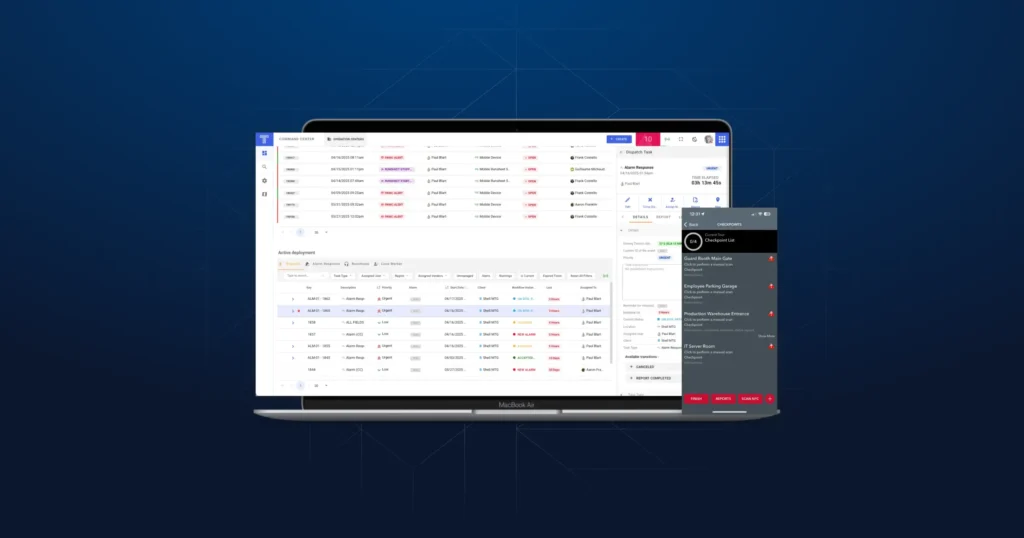
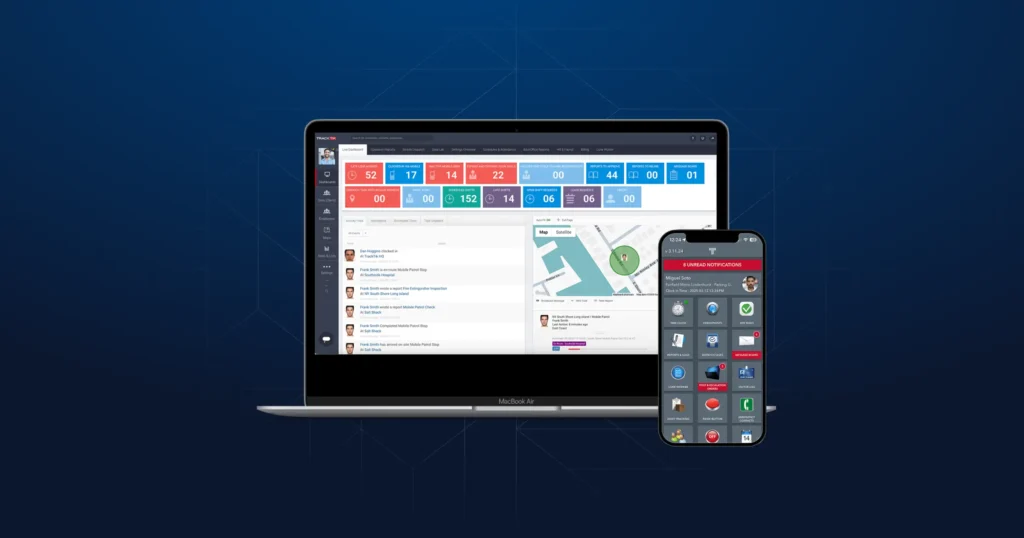
TrackTik’s security workforce management platform was purpose-built for enterprise compliance challenges. Unlike generic incident reporting tools, TrackTik integrates incident management with workforce optimization, operational visibility, and real-time communications—creating a comprehensive system that eliminates compliance gaps at their source.
The platform’s cloud-native architecture enables centralized oversight with local flexibility, ensuring consistent incident documentation across all facilities while accommodating state-specific requirements. Real-time data synchronization means compliance teams have immediate access to officer-documented incidents—critical for meeting OSHA same-day reporting or HIPAA 60-day breach notification deadlines.
For healthcare systems managing both employed and contract security staff, TrackTik provides unified oversight regardless of employment model. Manufacturing facilities integrate physical security incident data with broader EHS initiatives, creating the holistic operational view OSHA expects. Technology campuses configure workflows addressing industry-specific frameworks while maintaining litigation-ready evidence standards.
TrackTik’s reporting and analytics transform incident data into strategic intelligence, enabling organizations to identify patterns, allocate resources effectively, and demonstrate continuous improvement, creating the proactive posture that regulatory bodies reward and that prevents small compliance gaps from becoming major violations.
Eliminating compliance gaps in physical security operations demands systematic processes, enabling technology, and commitment to continuous improvement. For enterprise organizations, TrackTik delivers the comprehensive platform that transforms incident management from a compliance burden into a strategic operational advantage, protecting against regulatory penalties while building the foundation for safer, more efficient, and more resilient security operations.
Frequently Asked Questions
Featured Articles
Insights and advice from Spear faculty and industry experts