

Top Incident Response Dispatch Platforms: How to Select the Right Solution
Post on
March 5, 2026 •
By
TrackTik
Choosing the right incident response dispatch platform can mean the difference between a two-minute response and a ten-minute one. In an industry where speed and accountability define client trust, the tools your team relies on are no longer just an operational decision, they are a competitive one. Clients increasingly expect real-time visibility, documented proof of performance, and consistent response standards across every site.
This guide breaks down the key features to evaluate, how modern platforms are cutting response times, and how leading solutions compare. Whether you are scaling a mid-size operation or running an enterprise security program, the platform you choose will directly shape your response reliability, client retention, and competitive positioning.
Key Takeaways:
Key Features of Leading Dispatch Solutions for Incident Response
When evaluating physical security dispatch platforms, prioritize these essential capabilities:
Core Dispatch Capabilities:
- Automated incident-to-dispatch workflows — Alarm triggers automatically create dispatches and route to nearest available personnel
- Real-time GPS tracking & proximity-based assignment — System identifies and assigns the closest qualified guard based on live location
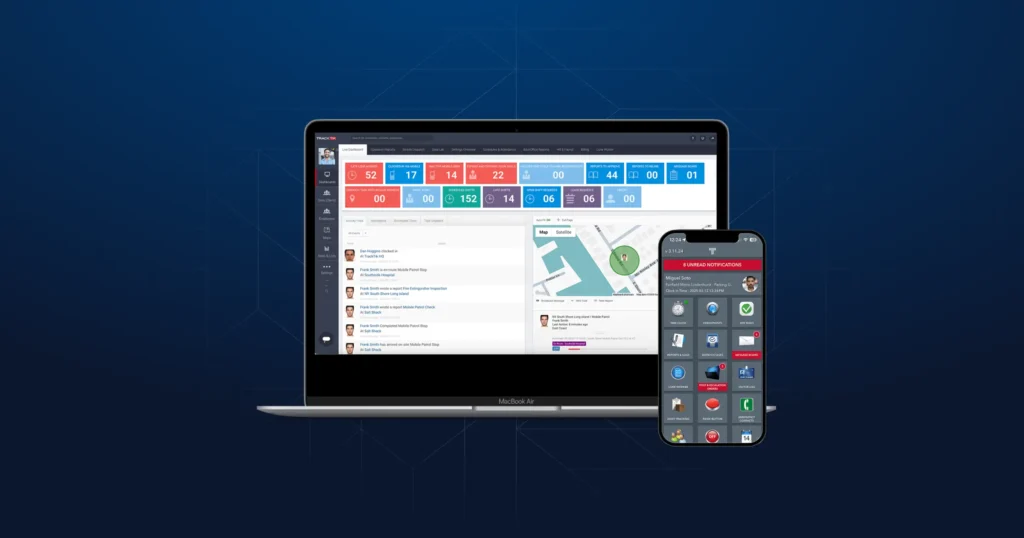
- Mobile-first guard experience — Push notifications, incident details, photo capture, and status updates via smartphone app
- Integrated communication — Two-way messaging, status updates, and escalation protocols without phone calls
- Dynamic ETAs — Real-time arrival estimates that adjust for traffic and route changes
Advanced Response Optimization:
- AI-powered scheduling & resource allocation — Predictive algorithms optimize guard placement and shift coverage
- Standardized response procedures — Pre-configured workflows ensure consistent handling of different incident types
- Integration with alarm/VMS platforms — Direct connections to Immix, Scylla AI video surveillance, and other detection systems
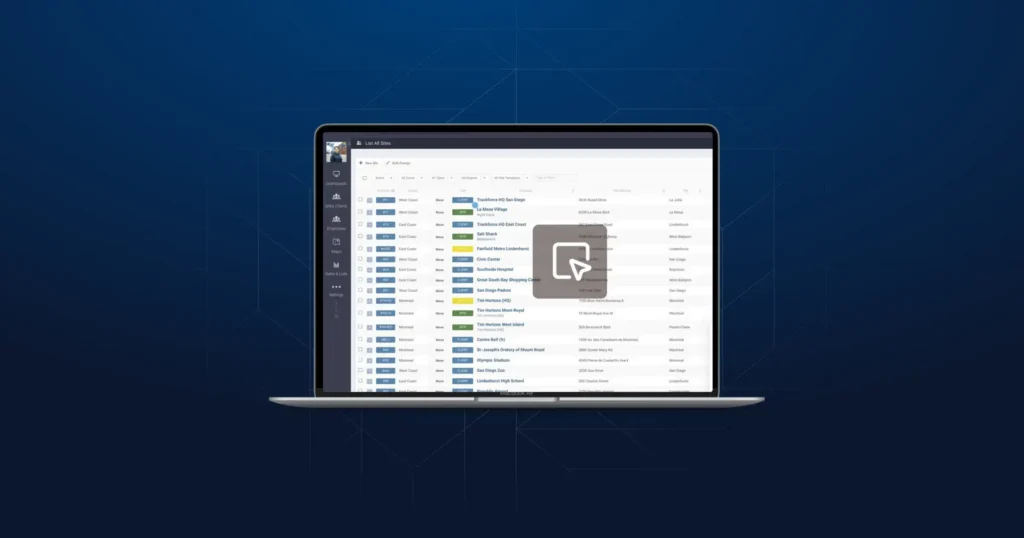
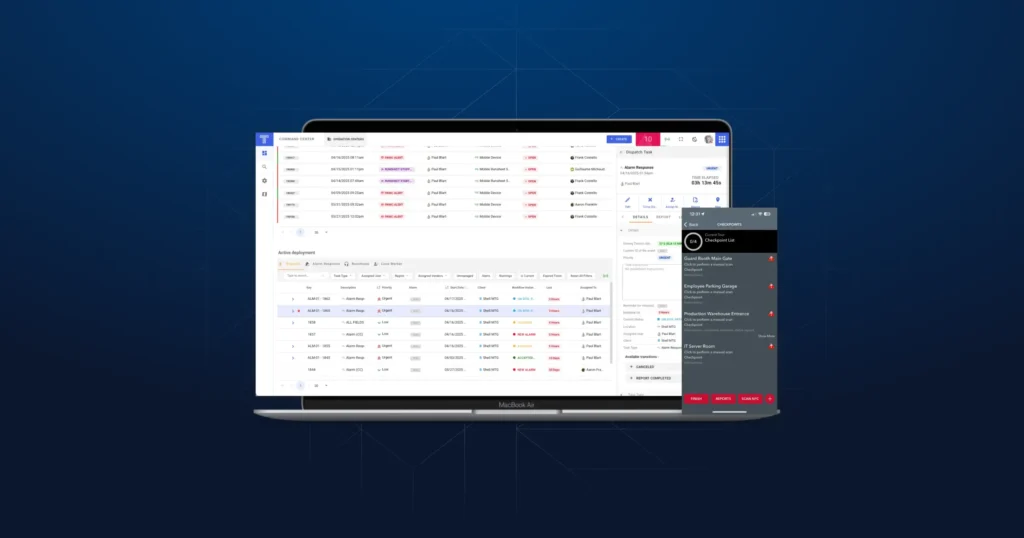
- Unified command center view — Single-pane visibility across all sites, incidents, and guard activity
- End-to-end audit trails — Complete documentation from detection through resolution and billing
Accountability & Reporting:
- Time-stamped response metrics — Track time from incident creation to dispatch to on-scene arrival
- Automated shift reports (DARs) — System-generated daily activity reports eliminate manual compilation
- Client portal access — Give customers real-time visibility into response activity and performance
Industry Insight: In 2026, platforms that combine AI-driven automation with seamless alarm system integration consistently rank highest for response reliability and operational efficiency. The ability to measure what was previously unmeasurable—like dispatch-to-arrival time—has become table stakes for competitive security providers.
How Dispatch Software Improves Response Times and Efficiency
Modern dispatch platforms transform incident response from reactive to proactive through three core mechanisms:
1. Eliminating Manual Coordination
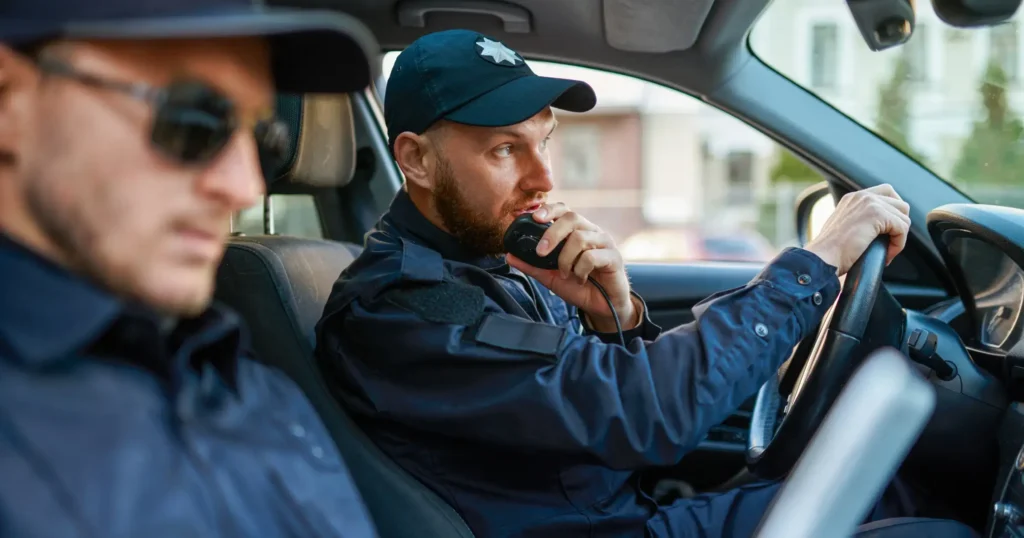
Traditional dispatch requires operators to manually assess incidents, look up guard assignments, make phone calls, and coordinate via radio. Each step adds 30-90 seconds of delay. Automated dispatch software completes this entire workflow in under 5 seconds, instantly pushing incident details and location to the nearest guard’s mobile device.
2. Intelligent Resource Allocation
By combining real-time GPS data, skill-based credentialing, shift schedules, and incident priority, dispatch AI assigns the optimal responder every time—not just whoever picks up the phone first.
3. Continuous Visibility & Accountability
When operators can see every guard’s location, incident status, and response progress on a unified map view, they can proactively manage exceptions, redeploy resources, and keep clients informed—without making a single phone call. As Ollivier Managed Security notes, “Even basic efficiencies—like dispatching directly from the command center instead of calling guards manually—are now measurable. This data isn’t just about saving time; it’s how we demonstrate value to our clients and differentiate ourselves”
The Result: Faster response, fewer missed incidents, complete documentation, and measurable proof of service delivery.
Comparison of Top Dispatch Solutions for Incident Response
Here’s how leading physical security guard dispatch platforms stack up:
 Command Center |
TEAM Software |
Belfry |
Officer Reports |
Novagems |
|
Target Market |
Multi-industry field service (hospitality, cleaning, security). |
Mid-size security guard companies. |
Small security companies prioritizing mobile reporting. |
Budget-conscious small security firms. |
|
Key Features |
Generic workforce management, scheduling, dispatch, time tracking. |
Guard management and dispatch combined, basic incident tracking, mobile app, security-specific workflows. |
Digital guard tour verification, basic incident forms, checkpoint scanning. |
Basic guard tracking and supervision, operations management. |
|
Integrations |
Not security-specific; built for hospitality and cleaning services with security as secondary use case. |
Limited third-party integrations; primarily standalone system. |
Limited dispatch automation; minimal alarm system integrations. |
Limited integrations and alarm system connectivity. |
|
Pricing Tier |
Mid-tier pricing; cross-industry platform. |
Mid-market pricing. |
Entry-level pricing. |
Lower-tier pricing. |
Buyer Selection Checklist
Why TrackTik Command Center Leads the Category
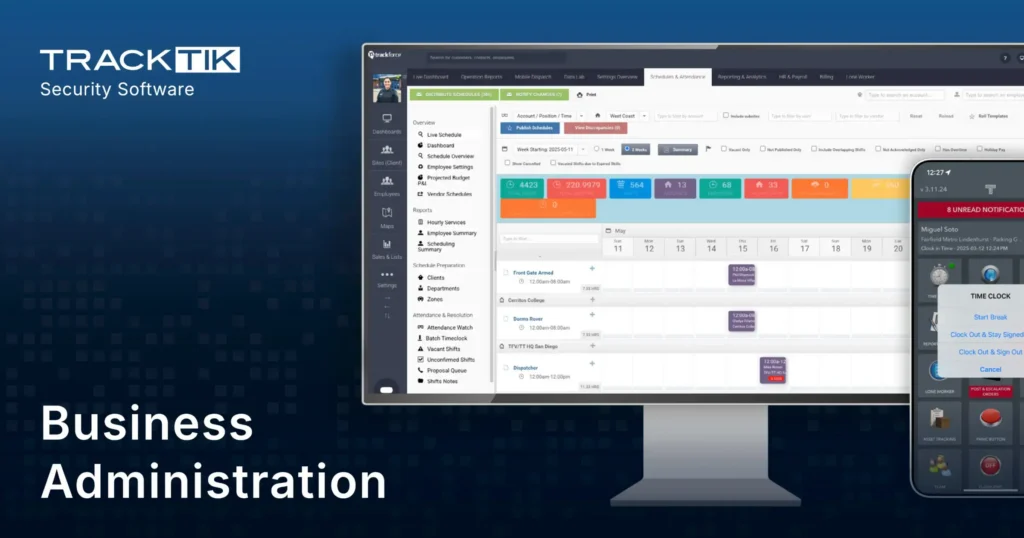
TrackTik Command Center stands apart as the only platform purpose-built to bridge the gap between physical security detection systems and guard response workflows. Key differentiators include:
Integration-First Architecture — Direct integrations with Immix alarm management and Scylla AI video surveillance enable fully automated dispatch workflows. When Scylla’s AI identifies a verified threat, Command Center automatically creates an incident, dispatches the nearest guard, and tracks resolution with no human intervention required.
Unified Operations Platform — Unlike standalone dispatch tools, Command Center is integrated with TrackTik’s complete workforce management suite (scheduling, reporting, billing, compliance). This eliminates data silos and enables end-to-end operational visibility from detection through billing.
Measurable Response Time Reduction — The platform tracks previously unmeasurable metrics like incident-creation-to-dispatch time and dispatch-to-arrival time, giving operators real-time visibility and clients data-backed proof of performance.
Standardized Response Procedures — Pre-configured workflows ensure consistent handling of different incident types across locations globally, with support for 55+ languages and local compliance requirements.
Bridging Detection and Response
The best incident response dispatch software doesn’t just coordinate guards—it transforms security operations from reactive to proactive by eliminating the gap between threat detection and human response.
For security providers serious about delivering measurable response times, audit-ready documentation, and differentiated client value, Command Center delivers the operational efficiency and competitive advantage that defines modern security operations.
Ready to see how TrackTik Command Center can reduce your response times? Explore the platform at https://www.tracktik.com/tracktik-security-software/security-operations/ or learn how Ollivier Managed Security eliminated the detection-response gap at https://www.trackforce.com/blog/ollivier-managed-securitys-approach-to-unified-detection-and-response/
Frequently Asked Questions
Featured Articles
Insights and advice from Spear faculty and industry experts