
How to Solve Emergency Dispatch Challenges Using Incident‑Response‑Ready Software
Post on
February 5, 2026 •
By
TrackTik
Every second matters in an emergency. For enterprise security teams, delays in dispatching guards or responding to alarms can escalate incidents, endanger assets, and increase liability. Yet, many organizations still rely on fragmented workflows: alarms flow into one system, dispatch decisions are made manually, and field responders receive instructions through radios, phones, or text messages. The result is delayed responses, miscommunication, and limited visibility.
Modern emergency dispatch management software is designed to solve these challenges, enabling security teams to act quickly, coordinate effectively, and make decisions based on real-time information. By leveraging incident-response-ready software, organizations can unify operations, streamline workflows, and reduce time-to-dispatch—critical factors in any security program.
The Common Challenges in Emergency Dispatch
Security teams face several recurring pain points when managing incidents:
- Fragmented systems: Dispatch, monitoring, and reporting tools often exist in silos, forcing operators to toggle between multiple platforms.
- Slow manual workflows: Assigning guards and tracking their response frequently involves phone calls or radio messages, adding unnecessary delays.
- Limited situational awareness: Dispatchers struggle to view the full picture of an incident, including guard locations, camera feeds, and access control status, in real time.
- Data overload: Alerts and alarms generate high volumes of information, making it difficult to prioritize the right actions quickly.
These challenges are especially acute in enterprise environments, where security teams manage multiple sites, personnel, and technology systems simultaneously.
How Incident-Response-Ready Software Solves These Challenges
The solution lies in software designed specifically for incident response and emergency dispatch. Modern platforms provide several key capabilities:
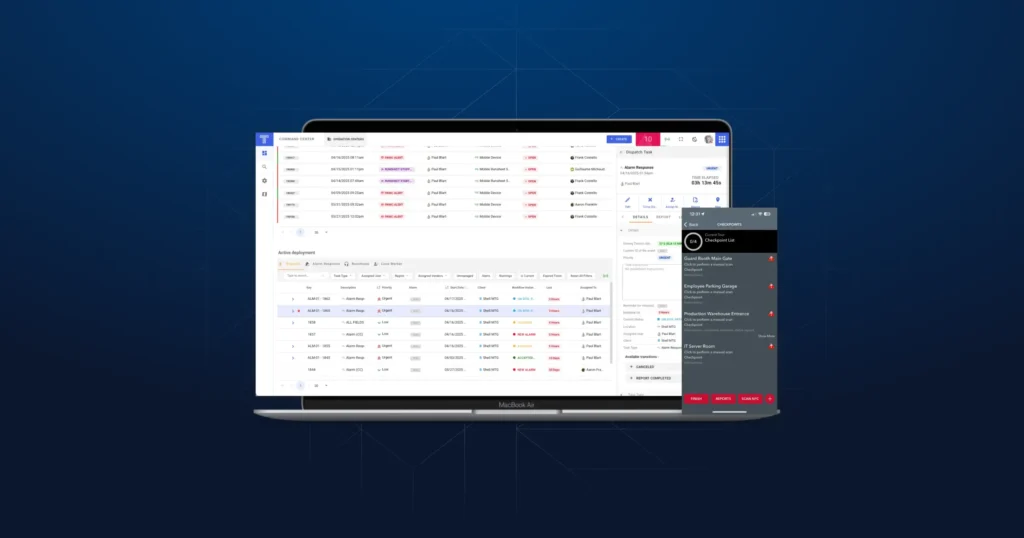
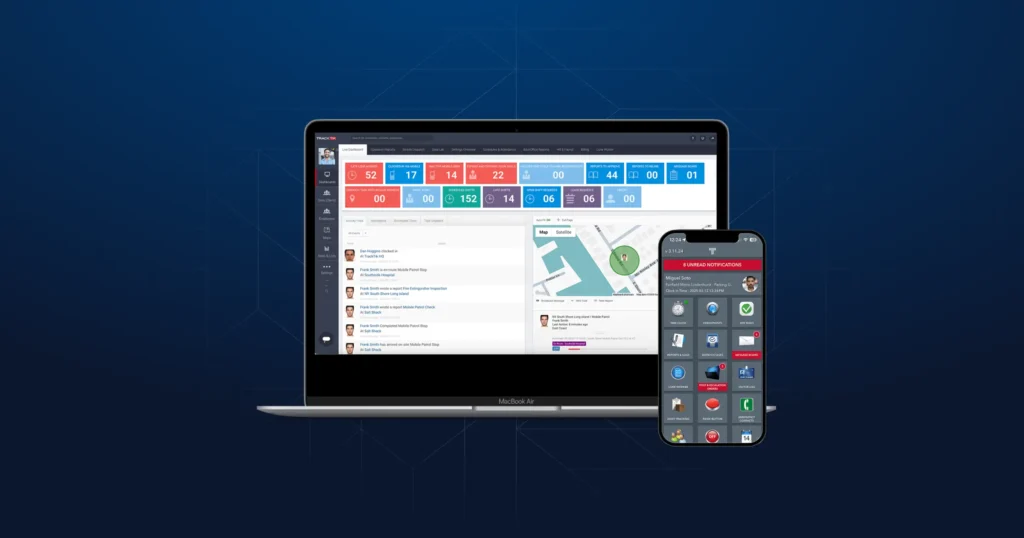
- Unified dashboards consolidate alarms, guard locations, sensor data, and operational logs, giving dispatchers a single source of truth.
- Automated notifications and workflows reduce human error and accelerate time-to-dispatch.
- Geospatial situational awareness allows teams to see responders and incidents on a live map.
- AI-powered dispatch systems prioritize incidents, recommend optimal personnel, and analyze historical data to improve future responses.
- Audit-ready reporting ensures every step of the incident—from alarm to response—is logged, creating measurable insights for operations and clients.
By combining these capabilities, security teams can move from reactive firefighting to proactive, intelligence-driven incident management.
A Real-World Example: TrackTik + Immix Partnership
One of the most effective examples of this approach comes from the TrackTik + Immix partnership. TrackTik is a cloud-native platform for security workforce management, while Immix specializes in monitoring and alarm management. Together, they provide seamless integration between electronic security systems and guard operations, addressing one of the most persistent challenges in emergency dispatch: the last-mile response.
Before integrating TrackTik and Immix, many companies—including Ollivier Managed Security—struggle with disjointed workflows. Alarms were assessed by operators, guards were dispatched manually via phone or radio, and incident data existed in multiple, disconnected logs. “There was no connectivity between the information coming in from the electronic systems and what was going out to the security personnel,” says Louis Boulgarides, President and CEO of Ollivier.
Once the integration was implemented, Ollivier gained a unified operational flow: alarms trigger in Immix, dispatch instructions are automatically sent via TrackTik, and guards’ locations and response times are tracked in real time. Reports now consolidate data from both systems, providing a complete, audit-ready view of every incident. “There’s no separation between the guarding side of the business and the system side anymore,” Louis explains.
This transformation illustrates how incident-response-ready software not only accelerates dispatch but also enhances situational awareness, reduces miscommunication, and creates measurable operational efficiencies.
Check out Ollivier’s innovation success story here: https://www.trackforce.com/blog/ollivier-managed-securitys-approach-to-unified-detection-and-response/
Implementing Incident-Response Software in Your Organization
Adopting modern dispatch software involves more than technology—it’s a process of aligning people, data, and workflows. Organizations can follow a stepwise approach:
- Define objectives and stakeholders: Align dispatch teams, IT, field operations, and partner agencies on goals such as reducing response times, improving accuracy, and meeting compliance requirements.
- Map data sources and integration needs: Ensure CAD, RMS, GIS, camera feeds, and other systems can feed into the unified dispatch platform.
- Pilot targeted use cases: Start with common incidents, like fire alarms or perimeter breaches, to validate automated notifications, guard assignment, and incident tracking.
- Train teams and iterate workflows: Scenario-based drills and feedback loops build adoption, refine processes, and maximize operational effectiveness.
- Scale adoption: Expand the platform to additional sites and teams once workflows are proven, using performance metrics to guide adjustments.
Even small efficiencies, like eliminating manual phone calls to dispatch guards, can be tracked and reported to clients, creating both operational and business value.
The Role of AI and Automation in Emergency Dispatch
AI is a critical differentiator in modern dispatch systems. By analyzing incoming signals and historical patterns, AI can:
- Automate triage and prioritize high-risk incidents
- Recommend optimal resource allocation
- Detect critical keywords or events in real time
- Provide analytics for continuous operational improvement
These capabilities reduce decision latency, freeing dispatchers to focus on critical judgment calls rather than administrative tasks. In practice, AI transforms emergency response from reactive to proactive, enabling teams to act faster and smarter.
One of the biggest benefits of incident-response-ready software is end-to-end visibility. Security teams gain:
- A real-time view of active incidents and guard locations
- Integrated live video, access control, and sensor data
- Automated notifications for responders across multiple agencies
- Consolidated, auditable reports for compliance and operational insights
With all relevant information visible in a single interface, decision-makers can allocate resources efficiently, minimize response times, and reduce risk. For Ollivier, this means being able to answer critical questions in seconds: Where was security? Which cameras and access points were involved? How quickly did responders arrive?
From Fragmented Response to Unified Action
Emergency dispatch is evolving. Organizations can no longer rely on disconnected systems and manual workflows. Incident-response-ready software provides the tools to unify operations, reduce response times, and improve operational clarity.
The TrackTik + Immix partnership, exemplified by Ollivier Managed Security, shows how these tools work in practice. By integrating alarm monitoring, automated dispatch, and real-time guard tracking, teams gain visibility, efficiency, and measurable impact.
For enterprise security teams, solving emergency dispatch challenges isn’t just about adopting software—it’s about creating a smarter, faster, and more defensible security operation. In a world where every second matters, integrated dispatch systems turn complexity into clarity, enabling security teams to respond with confidence.
Frequently Asked Questions
Featured Articles
Insights and advice from Spear faculty and industry experts