

Purpose-Built vs. General Workforce Management: Why Security Operations Need Specialized Solutions
Post on
October 21, 2025 •
By
TrackTik
When evaluating workforce management platforms, security operations managers face a critical decision: invest in a purpose-built security solution or adapt a general workforce management tool. While the latter may seem cost-effective initially, this choice often leads to operational gaps, compliance risks, and client service failures that ultimately cost more than any upfront savings.
The reality is that security operations have fundamentally different requirements than retail scheduling, restaurant shift management, or general field service coordination. Understanding these differences—and why they demand specialized technology—is essential for making the right platform investment.
The Security Operations Difference
Security work operates under constraints that simply don’t exist in most other industries. Guards work alone at remote sites throughout the night. They’re responsible for protecting assets worth millions while managing unpredictable incidents that can escalate quickly. They must prove their presence at specific locations at precise times to satisfy both client contracts and regulatory requirements.
Consider a typical overnight shift: A security guard patrols a manufacturing facility, scanning NFC checkpoints every 30 minutes to verify their rounds, documenting a suspicious vehicle in the parking lot, and coordinating with local law enforcement when the situation escalates. This single shift involves GPS verification, checkpoint validation, incident reporting with photo evidence, real-time escalation workflows, and detailed audit trails—all while the guard works completely alone.
Now imagine trying to manage that scenario with software designed for scheduling restaurant servers or tracking retail employees. The gap becomes immediately apparent.
What General Workforce Tools Miss
Generic workforce management platforms excel at their intended purpose: scheduling shifts, tracking time, and managing payroll. They work beautifully when your primary concern is ensuring enough people show up to cover the lunch rush or stock shelves.
But they fail security operations in critical ways:
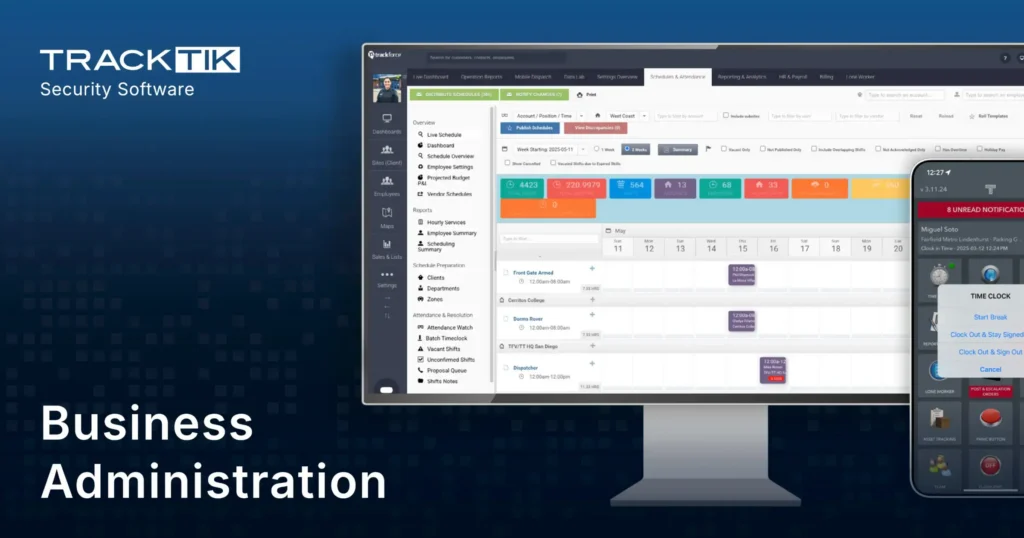
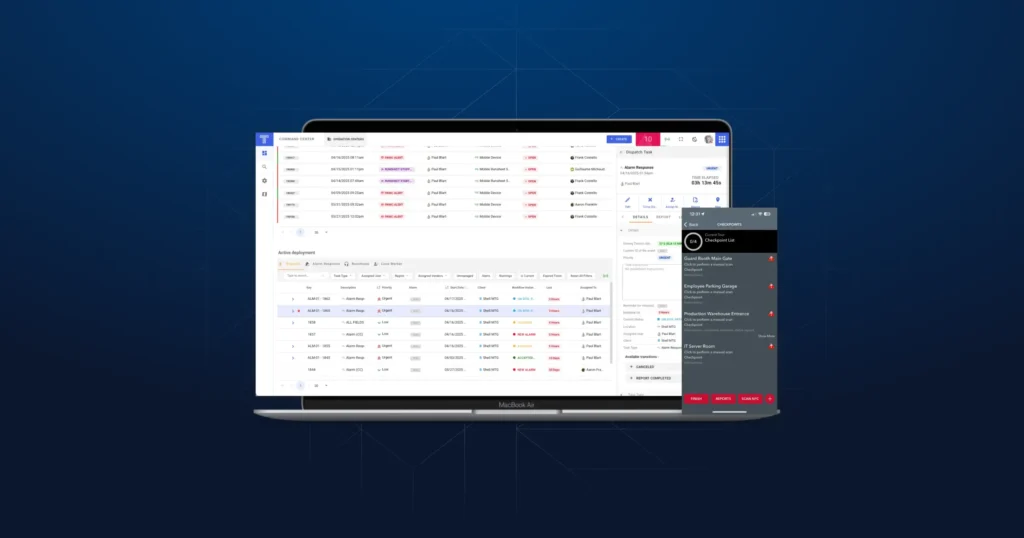
- Proof of Service: General platforms can tell you when an employee clocked in, but they can’t verify that your guard actually walked the perimeter of Building C at 2:47 AM as required by your client contract. Purpose-built platforms like TrackTik integrate GPS-verified guard tours and NFC/QR code checkpoint scanning that provide indisputable evidence of service delivery. When a client questions whether their site was properly patrolled, you need more than a timestamp—you need location-verified proof.
- Incident Management: When a security guard discovers a break-in, finds a safety hazard, or encounters a medical emergency, they need immediate access to structured incident reporting with photo uploads, witness statements, and automatic escalation protocols. General workforce tools might have a notes field. Security platforms have comprehensive incident workflows that route critical information to the right people instantly, maintain chain of custody for evidence, and generate reports that satisfy insurance and legal requirements.
- Compliance Tracking: Security guards require valid licenses that vary by state and must be renewed regularly. Some sites require additional certifications—firearms training, first aid, specialized facility clearances. A general platform might track certifications if you build custom fields, but it won’t automatically prevent scheduling an unlicensed guard at a site requiring specific credentials. TrackTik’s compliance license tracking does exactly this, flagging issues before they become costly violations.
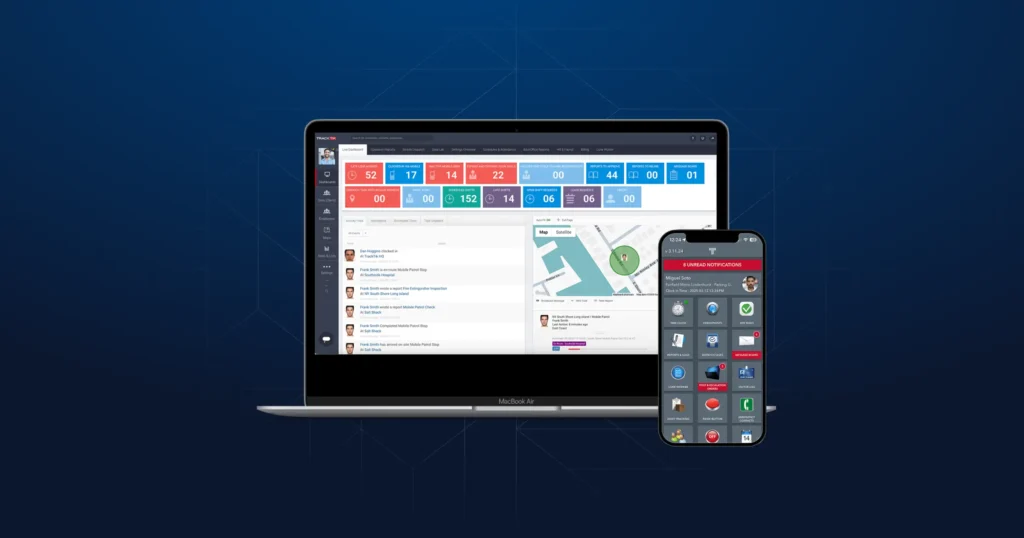
- Client Portals and Transparency: Security is a service business where clients demand visibility. They’re not just paying for labor hours—they’re paying for protection and accountability. Purpose-built platforms provide client portals that deliver real-time service verification: completed guard tours, incident reports, and checkpoint scans. This transparency builds trust and reduces service disputes. General platforms lack this client-facing capability because it’s not relevant to most industries.
The Compliance Gap: Risk You Can’t Afford
Security operations exist in a heavily regulated environment. State licensing boards mandate specific training and certification requirements. Clients include government facilities, financial institutions, and healthcare providers with strict security protocols. Insurance carriers require detailed incident documentation and proof of proper training.
When you manage security operations with general software, you’re manually bridging compliance gaps that should be automated. You’re tracking licenses in spreadsheets, hoping you don’t miss a renewal. You’re trying to remember which sites require which certifications when scheduling shifts. You’re scrambling to compile incident reports when an insurance claim or lawsuit arrives.
The first time you unknowingly schedule an unlicensed guard at a regulated facility, the cost of non-compliance—in fines, contract penalties, and reputation damage—will dwarf any savings from cheaper software.
Real-World Failure Scenarios
Scenario 1: A retail property manager claims your overnight guard never completed their required rounds. Your general workforce app shows the guard clocked in and out, but you have no GPS verification of their location or checkpoint scans proving they walked the property. Without proof, you lose the dispute—and potentially the contract.
Scenario 2: A guard at a pharmaceutical facility discovers evidence of tampering and reports it verbally to their supervisor. With no structured incident reporting system, critical details are lost in the relay. Security camera footage isn’t preserved within the required timeframe. When investigators arrive, your documentation is inadequate, exposing your company to liability.
Scenario 3: Your team schedules a guard for a government facility requiring specific clearances. Your general platform doesn’t flag that their credentials expired last month. You discover the issue only when the client calls to report your guard was denied access. You’ve now failed to deliver contracted services and must explain to your client why your systems didn’t catch an obvious compliance issue.
The Bottom Line: Purpose-Built Matters
Security operations management isn’t just about scheduling shifts—it’s about verifying service delivery, managing risk, maintaining compliance, and providing clients with the transparency and accountability they demand. General workforce management tools weren’t designed for these requirements, and attempting to force-fit them creates operational gaps that expose your business to risk.
Purpose-built platforms like TrackTik exist because security operations need specialized solutions. The question isn’t whether you can afford industry-specific software—it’s whether you can afford the compliance failures, service disputes, and client losses that inevitably result from using tools that weren’t built for your industry’s unique demands.
When evaluating platforms, choose software designed for the work you actually do, not just the shifts you need to fill.
Frequently Asked Questions
Featured Articles
Insights and advice from Spear faculty and industry experts