

Cost-Effective Security Operations Management: Building Lean, Scalable, and Connected SOCs
Post on
December 11, 2025 •
By
TrackTik
Enterprise security has entered a period of profound change. Multi-site operations, increasing compliance requirements, and evolving threat landscapes are forcing organizations to reconsider how they manage security. Traditional approaches such as adding staff, layering tools, and relying on manual processes are no longer sustainable. The solution lies in cost-effective security operations management, a model designed to maximize protection while minimizing unnecessary expenses and operational friction.
In this model, operational intelligence, automation, and workforce optimization replace brute-force scale. Platforms like TrackTik become central, connecting frontline security teams, dispatch, reporting, and analytics into a cohesive command environment. This integration allows organizations to achieve more with the same resources and scale efficiently without inflating costs.
For a deeper look at how to improve SOC efficiency, see 9 Security Operations Centre Best Practices for Efficiency and Cost Savings.
Understanding Cost-Effective Security Operations
At its core, cost-effective security operations management is about aligning resources, processes, and technology to deliver the highest security outcomes per dollar spent. It is not about cutting the workforce or reducing coverage. Instead, it focuses on eliminating inefficiency, centralizing visibility, and automating where appropriate.
Organizations adopting this approach can:
- Improve resource allocation across multi-site environments
- Accelerate incident response without increasing staffing
- Streamline compliance and audit reporting
- Reduce redundant or manual processes that consume time and budget
Cost efficiency in security operations is a matter of strategic alignment. Every patrol, incident report, and dispatch decision should contribute measurable value rather than add administrative overhead.
To explore the benefits of real-time dispatch in improving operational efficiency, read How to Boost Guard Efficiency with Real-Time Dispatch.
Integrating Enterprise Security Operations with TrackTik
Security operations centers often operate across fragmented tools including scheduling platforms, incident tracking systems, GPS or patrol verification tools, and compliance dashboards. While each may function independently, the lack of integration generates hidden costs such as duplicated effort, delayed response, and inconsistent reporting.
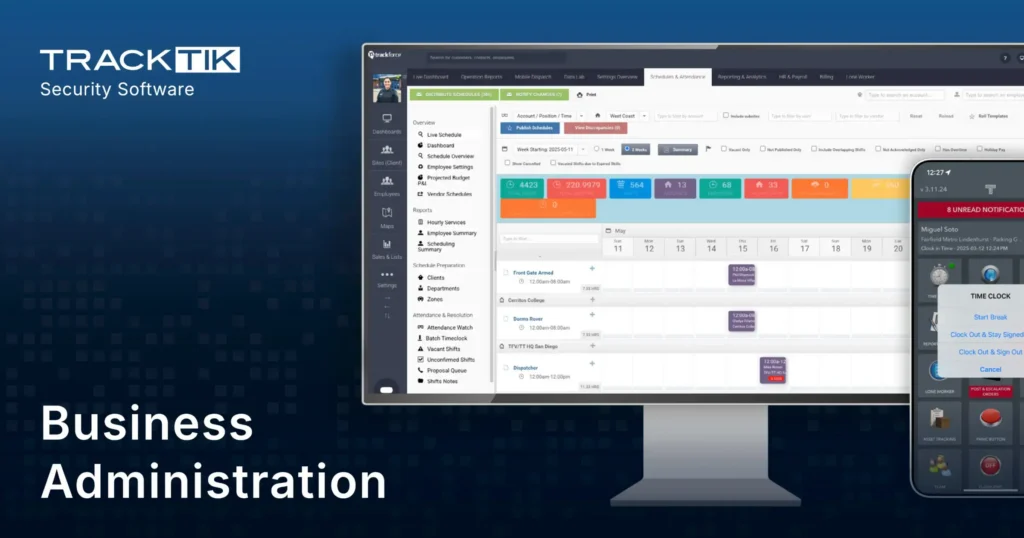
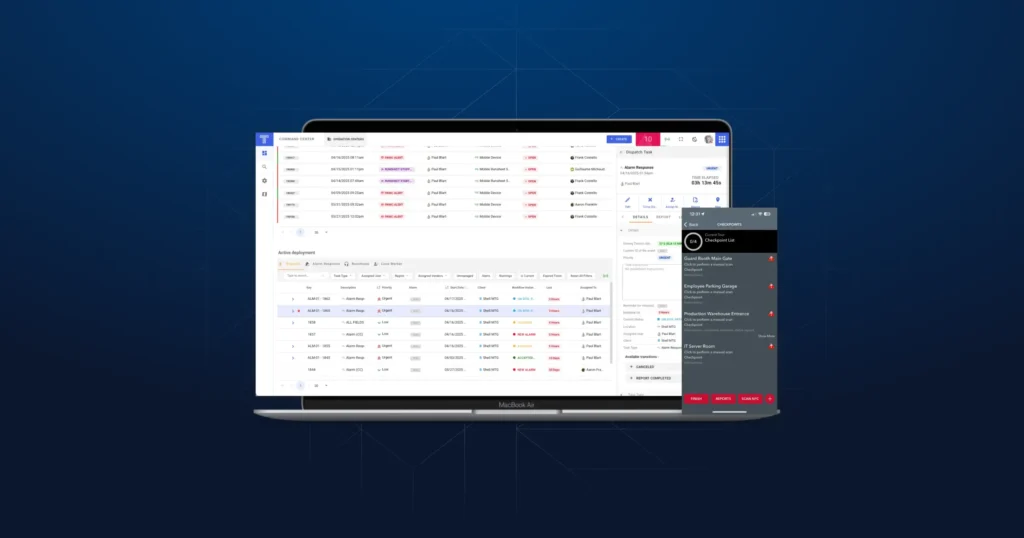
TrackTik bridges this gap. It can serve as a standalone command center, consolidating patrol, incident management, and compliance workflows, or as an integration hub, connecting with existing enterprise SOC platforms to unify operational data.
By consolidating disparate workflows into one platform, TrackTik allows security leaders to gain real-time operational visibility, reduce redundant work, and optimize resource allocation across multiple sites.
Example of operational integration benefits:
Operational Area
Traditional Challenges
TrackTik-Enabled Optimization
Automation as a Key Driver of Security Cost Optimization
Automation plays a pivotal role in reducing operational overhead while enhancing response capability. By eliminating repetitive, low-value tasks, teams can focus on activities that require judgment, strategy, and real-time decision-making.
Within a cost-effective SOC, automation can include routing incident reports automatically based on priority and location, verifying patrols via GPS and timestamped logs, generating compliance evidence continuously to support audits, and adjusting guard schedules in response to incident trends or site risks.
By removing the need for manual intervention in these areas, automation reduces operational costs and increases efficiency, making it easier to maintain high-quality security coverage across multiple locations.
TrackTik’s automation capabilities help organizations implement scalable and unified security platforms that improve operational outcomes while controlling cost.
Continuous Monitoring and Risk Assessment for Proactive Efficiency
Cost-effective security operations rely on proactive management. Continuous monitoring ensures incidents are identified, analyzed, and addressed before they escalate, while risk assessments inform where to allocate resources for the greatest effect.
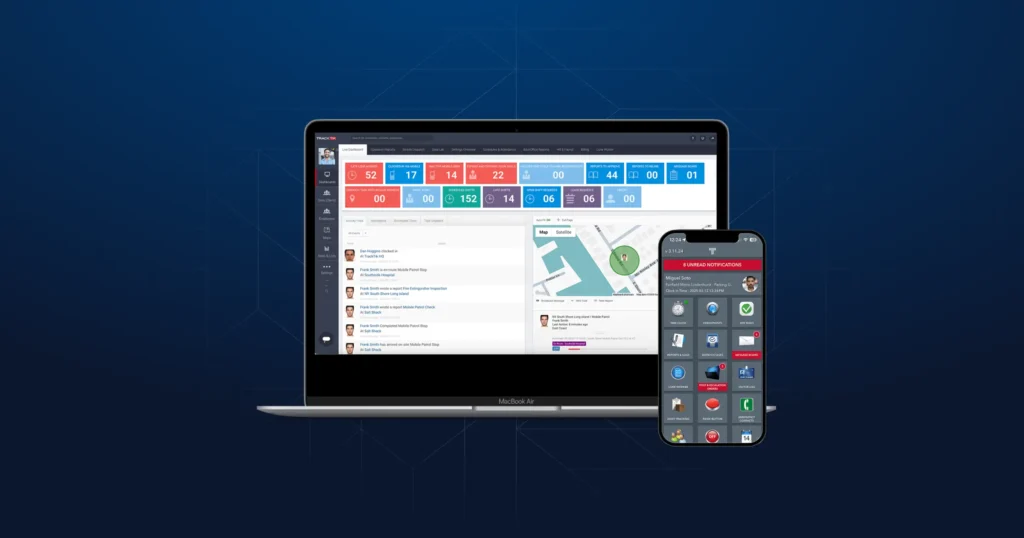
TrackTik provides centralized dashboards showing guard activity and site coverage in real time, incident status and response times, and historical patterns for risk-prioritized resource allocation. Proactive visibility allows security leaders to address vulnerabilities early, reducing expensive corrective actions later.
Governance and Accountability as Efficiency Drivers
Well-structured governance is essential for maintaining cost efficiency. Clear reporting lines, defined escalation protocols, and role-based responsibilities prevent duplication of effort and reduce the risk of errors that generate hidden costs.
TrackTik supports governance by embedding workflows that define responsibility and escalation, tracking actions and decisions automatically for accountability, and standardizing reporting across locations to maintain audit readiness.
By formalizing governance through integrated operational processes, organizations reduce both operational friction and compliance risk.
Scaling Security Operations Without Proportional Cost Increases
Expansion traditionally drives proportional cost increases. More sites require more staff and administrative work. In a cost-effective model, scaling does not necessitate linear cost growth.
TrackTik allows organizations to add new sites or teams without duplicating supervisory effort. Centralized dashboards, automated scheduling, and integrated reporting ensure that additional coverage scales efficiently, maintaining control over both operational quality and budget. Growth becomes an operational configuration rather than a staffing problem.
Training and Workforce Enablement for Maximum ROI
Even the most sophisticated platform requires trained personnel to deliver value. Cost-effective security operations prioritize workforce development, ensuring staff can leverage tools, interpret operational data, and respond effectively to incidents.
Key areas for ongoing training include patrol execution and response protocol, platform proficiency including incident management and reporting, and compliance procedures and documentation standards.
When staff can fully utilize integrated platforms like TrackTik, automation and visibility tools achieve their full return on investment. TrackTik also supports ongoing workforce efficiency benchmarking to monitor effectiveness.
Measuring Performance and Driving Continuous Improvement
A cost-effective SOC is measurable. Organizations should track performance using metrics such as response time per incident, patrol coverage relative to site risk, staff utilization and productivity, and compliance readiness and audit cycle efficiency.
Integrated platforms centralize these metrics, allowing leadership to identify bottlenecks, adjust resource allocation, and iterate strategies that optimize both security outcomes and operational spend.
From Cost Reduction to Operational Optimization
Cost-effective security operations management is not about cutting corners or reducing coverage. It is about eliminating inefficiency, enabling real-time decision-making, and ensuring every resource delivers value. By centralizing operations, automating repetitive processes, embedding governance, and training staff to leverage integrated tools, organizations can achieve a SOC that is both resilient and optimized for cost.
TrackTik’s role is central in this transformation. Whether as a standalone command center or an integrative hub within an enterprise SOC, it provides the operational visibility, workflow coordination, and data-driven intelligence that allow organizations to do more with less while maintaining the highest security standards.
Frequently Asked Questions
1. What is cost-effective security operations management?
Cost-effective security operations management is the practice of optimizing resources, processes, and technology to achieve maximum security outcomes with minimal waste. It focuses on eliminating inefficiencies, centralizing visibility, and using automation to ensure every action contributes value, rather than simply reducing spending.
2. How can TrackTik improve the efficiency of a Security Operations Centre?
TrackTik consolidates workforce management, dispatch, incident reporting, and compliance workflows into a single platform. This unification allows SOC teams to operate more efficiently, reduces redundant tasks, and ensures that personnel are deployed where they add the most value, enabling cost-effective SOC management.
3. What role does automation play in reducing security operations costs?
Automation streamlines repetitive or low-value tasks, such as incident routing, patrol verification, and compliance reporting. By removing manual processes, automation reduces operational overhead, allows personnel to focus on decision-making and response, and improves overall efficiency in security operations management.
4. How can organizations scale security operations without proportionally increasing costs?
Using a centralized platform like TrackTik allows organizations to add new sites or teams without duplicating supervisory effort. Automated scheduling, integrated reporting, and real-time operational visibility enable scalable growth while maintaining control over costs and operational quality.
5. Why is training important in a cost-effective security operations model?
Even the best tools require skilled personnel to deliver value. Ongoing training ensures staff can fully leverage integrated platforms, follow proper protocols, respond effectively to incidents, and maintain compliance. A well-trained workforce maximizes ROI on automation and visibility solutions while reducing operational inefficiency.
Frequently Asked Questions
Featured Articles
Insights and advice from Spear faculty and industry experts